Category Archives: Childhood

When I Sort My Pills I Pretend I Am Playing Mancala; What This Life Could Be Like

Tonight when I was getting my pills ready—two prescriptions for anxiety/depression and allergies; four vitamins/minerals/supplements—I realized that as I was putting each pill in each slot in the container, I was dropping them like I do the stones when I play Mancala, which I have been playing, since I was a child. A game that is so easy, so strategic, so simple, so complex, that I would argue that it is more difficult to play the older you get. Mancala is an excellent metaphor for this life. Something so simple as picking up a handful of stones, distributing them into some holes on a board, can make a game that entertains for hours, but it is also symbolic of the ways in which we pick up things as we live, deposit them in both ourselves and other, and we hope there’s some leftover to keep close to our hearts.

Something so simple as sorting pills, can made me think about my life and what I’ve done well and not done well. When players finish Mancala, the goal is to have the most stones in your bank; when you finish life, for me the goal is to have lived well and stored up some treasures in your life’s bank. Is there a prize for finishing with the most? I watched my mom die a painful death, then I turned around and watched my dad do the same. They were in several of the same rooms at the same hospital, and neither of them made it out to die at home like they wanted. They both were rich in people, comfortable financially, and poor in health. So, watching them makes me wonder, what is the end goal? Wondering about the end goal doesn’t keep me from hoping to put as many stones as possibel in my bank. I want to die well.

Life has been hard lately. A little like Mancala is if you really try to play it well. This past year held a lot of loss for me as my mother-in-law died in April, then one of my most important friendships shifted and will likely come to an end, my dad died painfully since the hospital did not, in fact, turn off his defibrillator as he asked when he checked in and opted for hospice care, and now I am spending the holidays contemplating the end of things and hoping for a new beginning. I suppose that is what this season is for; we sit in darkness reflecting on the past and waiting for a great light in our hope in the future.

I am establishing some new patterns for myself right now, and I am appreciating the simplicity of them, while also looking forward to adding a few more things into my life that only matter to me. Basically, I ramping up the self-care for the New Year, putting my hope in God, and trying to live a kind and compassionate life. So, here are the goals for 2026:

Love more and better. Sometimes when I love, I lose myself. My goal this year is to love so well, that I don’t lose myself, and that the other person gets to become the best version of who they are as well. I lose sight of that sometimes, and try to make people be who I want them to be, but I can’t do that. Other people aren’t my responsibility. I am only called to love them.

Be more honest and vulnerable. I have a tendency to hide what I am really feeling about something, especially if I am confused by it or hurt or sad. I show anger easily—something I am working on—and I show joy easily, but I tend to not explain why I hurt or am sad to people, and I think if I can be more honest and vulnerable, it might strengthen my relationships with many people.

Move more. I plan to start swimming in the mornings before school again. I have been going to bed around 8 and waking up around 5, so that gives me plenty of time to get to the pool to get a couple thousand yards in before school starts. I also plan to start walking/running in the evenings after I come home from school.

Read and write more. When I come home from school, I’ve been turning on the Netflix fireplace and sitting with my books. I read some, I journal some, and I think about what small beautiful things I experienced that day. I’ve also been thinking about what I am grateful for each day. It’s been a lovely practice.

Practice moderation. This is true in food, exercise, time alone, time with people, and so many areas. I need to remember that a plan is a plan, but sometimes moderation is better.

Be present. During meditation, I have experienced moment of radical presence. I’d like to cultivate those into my daily life. I’d like to forget about the past and the future, and simply live in the now. One of my favorite meditations says, “Be simple and easy.” I’d like that.

Practice silence. I plan to spend three days each quarter in a silent retreat. I plan to do these at my own house without any kind of technology, reading and journaling and meditating and praying. I want to give mysel fthe gift of just existing for three days every three months. One full day per month to experience silence and solitude. Hopefully, next winter, I can plan a weekend retreat at a convent or monastery to close out the year of silence.

The year 2025 held a lot of thought about death and dying and ending, so for 2026, I want to focus on living and hope and joy. May it be so.
When You Shoved a Desk at Me as I Walked Past You . . .

I didn’t punch you, like any of the teachers in any of the viral videos punched their students.

I didn’t punch you, because . . .

I am an adult, and adults are here on this earth to nurture and mentor young people, to teach you who you should become as an adult, not to teach you who you shouldn’t become. If I had hit you, I wouldn’t be nurturing you or mentoring you. Most importantly, your decision-making skills will not be fully developed for another 10 years. I cannot expect you to make choices like a mentally-well adult, because you are a middle schooler.

I want, more than anything, for you to grow into a wonderful, smart, caring, kind, and loving man, not the sort of man I will read about in the headlines for doing something mean and heartless. I already had to read about a former student trying to murder his girlfriend, including some graphically sordid details that didn’t need to be in the newspaper. I don’t want to read something like that about you.

On most good days I actually enjoy my job, and I look forward to coming into a school where students, ready to learn or not, will get one little glimpse into the beauty of this world and into the theological concept of grace. My goal, each day, is to teach my students one thing that hadn’t ever thought about before.

I am a pacifist, and even if I wasn’t, I want for you to know that your first response shouldn’t be what can I do back to them, when they’ve done something wrong to you. I should model that a response can be forgiveness, love, and grace, not retribution.

I can control my initial reaction, and I can look you in the eye and tell you, “NEVER do that to me again, because a person’s first instinct is to hit back, or push back, and I don’t want you to get hurt.” I mean that. I really want you think through your actions, your words, your behavior, because I want for you to act with purpose, making good choices, not out of impulse, making poor choices.

You are a kid living with (probably significant) trauma in your life. You don’t need me to add onto that, and I probably didn’t think through this one hard enough when I got angry. Instead of talking through your actions with you and helping you to see how many other good and pure choices you could have made, I spoke harshly, punished you and your classmates who were laughing, and then made you work in silence.

I love you, even when you don’t love yourself. Even when your sole mission is to entertain the other kids in the class with behavior that is the opposite of what you know is right and good, I love you, and I want the best for you. At this point, it feels like I love you more and care about you more, than you love or care about yourself.

Dear Ten-Year-Old Me

When you are 40, you will look back on this day as both a pleasure and a pain.

You will remember the gentle sway of your canoe as you sit and relax in the path carved out through endless lily pads by many, many similar boats over the years. You will remember the long, long day you spent in this canoe with a girl whose mother played violin and whose father taught biology. The fickle world of middle school church camp and the fact that neither of you had a clear camp-friend forced the two of you together for the day-long canoeing adventure. You thought it would be a beautiful day, because you loved canoeing and swimming, but she talked nonstop about herself and how smart she was. You learned later, when her mother ended up substitute teaching at a school where you taught in your early twenties, that she got pregnant at 16 or 17 and that her life had been hard. You would not be sympathetic. In fact, you almost thought she got what she deserved.

But on this day, just before you entered 8th grade, you floated lazily, dragging your finger through the duckweed that coated the top of the water. You had just about mustered up the courage to break up with that jack ass boy, and you should have, but you couldn’t. You really should have, but that’s not why I am writing to you this time.

You had been a Christian for over half your life already, and you thought church camp was about the best and worst place you’d ever been. As you floated there, you thought about the spirituality of the place, the lessons, the bible study, the worship, the beauty of it. You thought about how silly some of it seemed, the cliquey girls, the boys who openly flirted with them, the contrived games at recreation time. You thought about a high school counselor from your hometown, who, when I look back on your young life, you may have been a little sweet on. Finally, though you just prayed.

You swayed back and forth as the girl tried to paddle you forward, and you dragged your finger in the water, and you prayed. Hard. You wanted answers. You had always heard God speak, and you always would hear that voice. Even when you are 40 you’ll hear God’s voice. God’s voice will never leave your body or your soul.

In that moment, when you were floating there suspended between your middle school world, the natural world, and the spiritual world, you heard the words that will disturb you for the rest of your life: “I want you to do my work. I want you to speak. I want you to minister to those around you. I have called you to this.”

Those words will both shape and destroy you. You will always wrestle with what this means for your life. You will always wonder if you are, in fact, ministering. You will always wonder why you heard these words and then a few years later figured out your sexuality which wasn’t compliant with your chosen denomination’s perception of your calling. Hell, your gender is barely compliant with your chosen denomination’s perception of a call to ministry. You will always wonder why you can preach, why you can counsel, why you can minister in all situations. You will always have people who want your counsel. You will always feel like you could do more to uphold and fulfill this call, this vision. You will always feel unsettled.

You will go to seminary for three years, and you’ll work in a church for five. You’ll preach sermons, you’ll mentor teenagers, you’ll make an impact on countless lives. You’ll leave all that behind to do the same in the public school system. You’ll go to graduate school and you’ll read books that make you feel whole, that will lead you to putting your bifurcated self back together, because all your life you’ve been taught that you can’t be gay and a Christian, let alone be a pastor. You’ll always feel a bit of that push and pull. You’ll be 35 before you finally figure out that living a call and ministering is a process of putting all your pieces back together. Of accepting those things about yourself that seem to be in opposition.

While you sit there in that canoe, think long and hard about what you’re hearing, what it means, and how you’ll follow that longing, that call. Make some different choices. Give yourself some grace. And revel in who God has called you to be.

Dear Claude Monet

If I could actually talk with you, I am not sure what I would say. I might just stand in your presence and weep. And then, hopefully without making you feel awkward, I’d reach over and hold your hands and look into your eyes, because I want to see and feel exactly from where those beautiful paintings came.

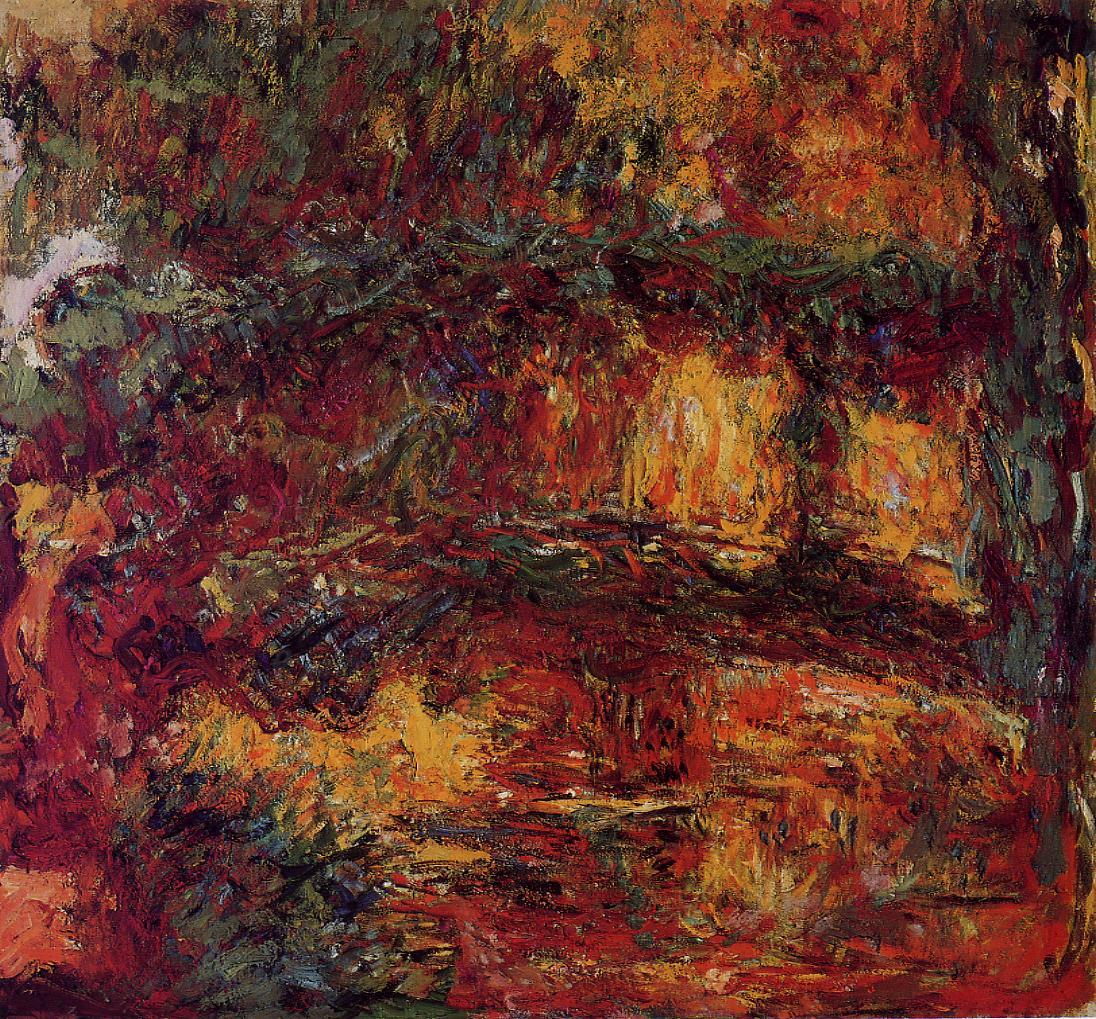
From a young age, when I saw your paintings in an art history book I checked out from the library, I was mesmerized. I knew I was in love with those colors, those subtle changes in light, those lilies, the Japanese bridge, the steam from the trains, even the boats floating in the harbor. I couldn’t keep myself from running my fingers across the pages of the book trying to feel you and your spirit through a print of a print of a painting that was done a hundred years before I was even born. I could sit for hours looking at one painting in particular. It drew me in. It made me queasy with familiarity and love.

As I grew older and continued taking art classes, I learned to appreciate other Impressionists, but I kept coming back to you and Mary Cassatt, as my two greatest loves in the art world. Don’t get me wrong, Claude, there are other artists I love, some that you, no doubt, would despise, but you are the one who most frequently steals my heart. You see, every time I think I know everything there is to know about you, or every time I think I’ve seen all of your paintings, I’m surprised by another variation, another subtle difference, another interesting fact about your life. I’d venture to say I’m slightly obsessed with you.

In 1995 the Chicago Art Institute exhibited a collection of your paintings called “Claude Monet: 1840-1926.” I was 21. I made sure I was there to see this collection, and here is where my first surprise about you came to fruition. I’d seen several of your paintings before at the Art Institute, but I was totally unprepared for what I was about see. I’d always read about how large-scale you worked, but it wasn’t until I was in a room, in a familiar art gallery, with several of your painting looming over me, that I realized just how large your paintings really are. They are huge, Claude, HUGE! I was overwhelmed and began to cry right there with all of touristy, artsy companions. I knew this was the largest collection of your works ever assembled in the United States, and I was absolutely overwhelmed.

I had seen everything in the exhibit, and was getting ready to leave it when I decided that I’d just walk back through one more time. As I salmoned my way back through the crowd, sort of nonchalantly, so I wouldn’t appear conspicuous to one of the many, many guards who had been employed for this occasion, I realized I hadn’t seen anything even resembling my favorite painting, the one I’d run my fingers across so many times in a book I’d checked out so frequently for so many years. I began to feel a bit sad for myself, even in the midst of all your great works. My painting, the one that touched the very core of me, wasn’t there.

I kept walking back against the flow of traffic until I was near the beginning of the exhibit again. I even walked back through what seemed like a million haystacks. (Can I pause here and ask you a question, Claude, what was the deal with the haystacks anyway?) So, as I make my way a second time through the exhibit, more leisurely, more carefully, focusing on those paintings I’d really loved the first time around, I realized that I’d not walked all the way through the Waterlilies display. I’d been taken by a painting I hadn’t seen before and then exited out of the waterlilies prematurely. I decided to take a slow walk all the way to the end of continuum, which is what it felt like. I could watch you move from a young vibrant man, painting with attention to every detail, to an older more gentle man, painting with attention to an entirely different set of details that were found in the bigger picture. I was lost in this progression of your life, of your loss of vision, of your further experimentation. I was daydreaming and just floating along in waterlilies, when I turned the corner and saw this:

the-japanese-bridge-at-giverny-1926Your work brought me to my knees right there in the middle of hundreds of people in the middle of the busiest exhibition to run at the Institute. I fell to the floor in awe and just wept, or more ugly cried, breaking into sobs. I’m can’t control my visceral reactions, which is embarrassing sometimes. I was moved beyond moved. When I finally stood up, my knees were weak, and I looked a mess. I had to resist walking up the painting and reaching out to try to touch you through it. I wanted to feel the textures, smell the paint. I wanted to reach back in time and feel what you felt when you were painting this beautiful work that had been speaking to me for years.

So, Claude, there you have it. I’m in love with you through this one painting. Thanks for making my life more beautiful with your art.

Dear Little Girl Who Was New in Second Grade

We sat together at lunch, in music class, and in the classroom. We played together for five recesses, then we sat under the birch tree, then you were gone. I don’t even remember your name. How I want to know your name. How I want to unpunch you.

My seven-year-old brain thought that if I was nice to you, people would say about me what they said about you: you dressed funny, you smelled bad, you brought your weird lunch in a brown paper bag, your teeth were all capped with silver, you were no doubt poor, and you lived at one of the less-desirable trailer courts in our district.

For all of these reasons I punched you in the face under the birch tree at recess that day. Every one was watching, the girls and the boys, so I had to save face. They said I loved you. They said I was a n—– lover, even though you were pale, pale skinned with blonde hair and blue eyes, and not African American at all. So I kept punching you in the face, in the sides, just like on TV, but when the teacher came over, I lied and said nothing happened. Even then I didn’t have the heart to face what I had done, and it was a good thing I wasn’t very strong because you only had a faint red patch on one cheek. You were too stunned to cry, and too scared to tattle.

You were different and a little bit weird. I was too, but my second-grade brain didn’t think about that. Our mutual oddities were evidenced by the fact that you and I had been having a lovely time sitting under the tree, watching the ants crawl on the blades of grass, talking about what they might be doing or where they might be going. We had previously broken off small bits of the birch bark and pretended we were pioneers taking notes with our charcoal pencils on those fragile pieces of bark, oblivious to the fact that our fantasy was so historically inaccurate.

The day before, which was your first day, we held hands while running through the field next to the playground and fell down laughing when you tripped on your long skirt. You didn’t make fun of my jeans that had to be rolled up because I was rounder than I was tall, and I didn’t ask about your beautiful, shiny, silver teeth. I was transfixed by how pale you were, the opposite of my darkness. Your long blonde braids were the perfect complement to my short black bob. I knew we’d be friends forever.

But then there was that horrible moment under the birch tree.

I need you to know that I’ve learned a lot since then, and I haven’t learned a lot since then. I would like to think that I’d not hit you today. I’d like to think I’d embrace you in the face of adversity. I’d like to think that given a challenge by my peers to chose someone who needs me over them, I’d chose you. I’d like to think I’d let people call me names for being friends with you.

But I am not sure I can promise you that. All the time. With complete assurance.

I strive every day to be the person I wish I would have been that day under the birch tree, but I still miss the mark sometimes. I strive to stand with those who need me, to recognize that my freedom is bound up with the freedom of those who have been oppressed, to be kind, to show grace, to be the person I know I need to be.

In my mind’s eye, I stand with you. I chose to be that person. I stop making excuses and I hold your hand under that birch tree, and tell every one else to just piss off. I give you grace, and I unload my shame.