Category Archives: Mental Health

To Be or Not to Be —That is the Question

To be or not to be? That is the question:
whether ’tis nobler in the mind to suffer
the slings and arrows of outrageous fortune
or to take arms against the sea of trouble
and, by opposing, end them. To die, to sleep.
No more, and by a sleep to say we end
the heartache and the thousand natural shocks
this flesh is heir to. ‘Tis a consummation
devoutly to be wished. To die, to sleep;
To sleep, perchance to dream. Aye, there’s the rub.
For in that sleep of death what dreams may come
when we have shuffled off this mortal coil
must give us pause. There’s the respect
that makes calamity of so long life.

I asked my British literature students to memorize at least fifteen lines from Hamlet. They had to write it on their blank paper, then explain what the lines meant, then explain why those fifteen lines were the ones they chose to memorize and why they were important in the context of the entire play. My students, in return, challenged me with the same, only I had to say mine in front of the class. The lines above are the lines I memorized, and you’ll notice there are only fourteen lines there. I wanted to memorize the first twenty lines, including these: “For who would bear the whips and scorns of the oppressor’s wrong, the proud man’s contumely, the pangs of despised love, the law’s delay, the insolence of office, and the spurns that patient merit of they unworthy takes, when he himself might his quietus make with a bodkin bare?” I didn’t get all of them memorized for today, but I hope to have them by tomorrow. If you knew me, you’d know how difficult this was for me. I am horrible at memorizing things verbatim. I tend to live by the spirit of the law, rather than the letter of the law, if only because I can’t memorize it by the letter. I chose these lines, because, aside from them being wildly popular, I love their depth and their beauty. I would also like to memorize Gertrude’s lines about Ophelia’s death. Both soliloquy’s describe the ways in which the characters’ roles hem them in and confine them according to the cultural standards of the time period. I’m intrigued by that.

*

Yesterday I spent the day with my brother. We started the day by running a 2.5-mile trial at Mississinewa Reservoir in Peru, IN. The trail was soft and muddy, so the running was slow and tedious with lots of roots and raspberry bushes reaching out to snag our legs. I had mud all over me. I even found some in my hair in the shower this morning. After we ran, we drove to Logansport and ate at a Thai/Philippine restaurant called Dinghy’s. We both had delicious, but really not healthy, food, and I had hot thai tea. From there we headed back to Peru to the McClure Family Orchard to sample some ciders and meads. They were good, but they weren’t really exceptional. The jalapeño one was especially odd. Finally, we headed back to Muncie via Upland, so we could stop at Ivanhoe’s for ice cream. Adam’s shake was horrible (apparently they have radically changed their milkshakes portions because there was almost no butterscotch, very few frosted flakes, and about ten mini-marshmallows in the whole thing), and my sundae was fine, but I ordered the wrong one, so there were no pecans on it. The day was excellent, though, and we had a great time spending the day doing sibling things!

*

When I started this entry, it was April 2, so I suppose that tells you a bit about my life as of late. My life is too full of stuff. My life reminds me of this George Carlin skit about stuff:

I had too much stuff. So I re-quit my dissertation. I quit piano lessons. I’m about to quit doing most of the extra stuff I’ve been doing. I’m about to go through my stuff and quit some of it. But, because I have this sick will to fill the space with something, I am training for a Half Ironman I’ve mentioned here before. Now is the time to put the rubber to the road in a literal way on my bicycle and on my feet, and it’s time to put the flesh to the water?! Well, however you might say that, it’s time to get my shit together, because there are only fourteen weeks until showtime. I’ll be amping up the exercise and completing a Whole 30 starting tomorrow.

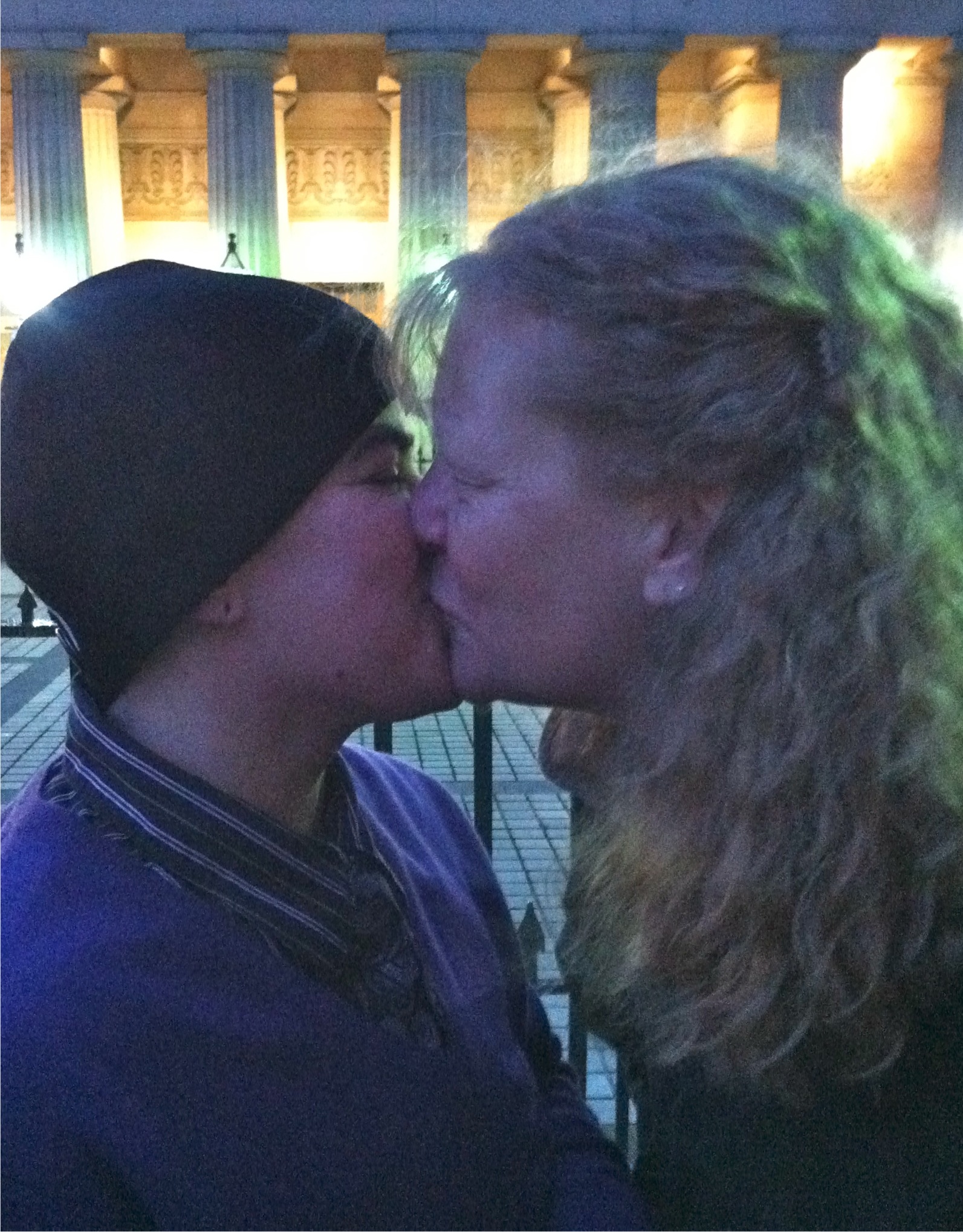
I also had so much stuff going on in my life, I didn’t get in a blog entry about Scotland. We went there for 8 days and 7 nights. We had the time of our lives with Andy and Claire. We stayed in Glasgow, Inverness, and Edinburgh. We got married in front of the Art Museum on the last day we were there. It was cold, it was rainy, and I had to wear the hat. I’ll write more about it later. I’m working on some serious essays about it, so I’ll let you know when they’re done.
attachment

*

All of this brings me back to my goals I’ve set for this year:

  1. Cultivate joy. I am trying to cultivate joy in new ways, and I am trying to keep from falling back into those patterns that don’t bring me joy. I’m trying not to focus on the negatives. Some days this is easier than others.
  2. Consume cleanly. For about a month, I’ve been really lax on the foods I’ve eaten. I’ve eaten lots of sugar, alcohol, and even some wheat. My body is not happy with me. My blood pressure was a bit higher last time I checked it, and my allergies have been acting up something fierce. I believe that if I get my food consumption under control, my lungs will be much less likely to be congested, making my breathing better.
  3. Exercise. I’ve been running at least a mile every single day. I think four days this year I’ve been too tired to run, so I’ve at least walked. I’d say that running 91 out of 95 days is pretty decent. I’ve also done some swimming and some biking, but this week is when I really put my nose to the grindstone.
  4. Be intentional. I’m working on this one.
  5. Play. I’m working on this one, too. Possibly getting rid of some of the stuff I’ve been doing will give me a bit more time to play.
  6. Stand up. Yep. The GSA is thriving, so I’d say, at the very least, I’m standing up for my GLBT students and their allies. It’s good stuff.

 

Cultivate Joy: Part One (John Wesley and Mother Teresa)

My first goal of 2013 is to cultivate joy. In my last blog post, I wrote that in order to cultivate joy, I would “do things which me bring me joy. Embrace the random. Enjoy the mediocre. Don’t stress over things I can’t control. Live in the moment and revel in those I spend my time with. Put down my phone or my other distractions and really love and live the moment.” For me those are the beginning steps to cultivating what I perceive to be pure joy. Because I am not the most joyful person, I decided to learn from what others have written about joy. What is joy? How does joy work? Is joy the same thing as happiness? Is joy what some mystics call ecstasy? Is joy something that one must experience every day in order to be considered joyful? I suppose I had (maybe still have) many, many questions about a theological, psychological, and behavioral characteristic I claim I am going to cultivate this year.

I intentionally used the word cultivate for what I intend to do with joy. There are really three types of cultivation. One type is more like refinement, which would require that I already possess some amount of joy that I simply plan to nurture and shape into much more mature, refined joy. This is not the type of cultivation I will be accomplishing. I will be using a combination of the second two types of cultivation: improving by the care or study of joy and fostering the growth of joy.

Much like a farmer cultivates crops in a field or a scientist cultivates specimens in petri dishes, I plan to plant, encourage, maintain, and harvest this joy. I plan to do the backbreaking work of starting from the ground up, digging little holes, planting little joy seeds, growing little joy plants, and then harvesting whatever little joy flowers or fruits grow from those plants. This is a whole new endeavor, and I didn’t even buy crop insurance. I’m not sure this is the sort of thing that can be insured. I’ll either come away with a bouquet of flowers or a peck of fruits from this year of cultivation, or I won’t. The pursuit of joy is mostly up to me and my willingness to work for it. Sounds weird: work for, cultivate joy.

Similarly, much like I have studied for the past few years to cultivate my knowledge of literature, I hope to study to cultivate my understanding of joy. I started by reading four articles, which is of course where I would start with this damn rational mind I’ve been given, but I plan to pay more attention to those people in my life who seem to be joyful. How is it that they can experience joy, when there is so much sadness, so much angst, and so much depravity in this world? Do they maintain certain habits? Do they hold certain attitudes? Do they rely on their spiritual lives, whatever religion or non-religion they may be? How do they seem to be so filled with joy?

Naturally, I first turned to John Wesley for thoughts about joy. Not because he was necessarily a joy-filled man, but precisely because he strove toward joy and sometimes fell short, did I turn to Wesley for wise words about the topic. In the article titled “John Wesley’s Moral Pneumatology: The Fruits of the Spirit as Theological Virtues,” Joseph William Cunningham writes: “The cultivation of spiritual virtue is abstract from community. Believers develop the holy tempers of righteousness, love and peace in relation to their neighbour. The fruits of the Spirit, though inward dispositions of the soul, are always socially oriented” (284). When I read these lines, I had three thoughts. First, I was elated that he used the word cultivated because that’s my word! (:)) Second, I was thrilled that he used the virtue, because when I was writing my goals for this year, I had in the back of my mind Ben Franklin’s thirteen virtues. Third, all theological concepts work best, and are meant to work best, when practiced in community. We are not designed to be solitary beings.

This photo was taken from http://anglicanhistory.org/wesley/. This photo was taken from http://anglicanhistory.org/wesley/.

On a more serious note, I really was elated when I saw these lines, but it was more because it has always seemed that joy is an inwardly focused theological concept; joy is about how I feel, right? The above quote made me think of the many ways in which joy is much more outwardly focused. Though Cunningham doesn’t list joy here in this passage, I can’t help but think joy comes in community, that joy is an “inward disposition” that should be “socially oriented.” I’ve experienced joy in my life, and usually that joy was felt in community. I have been in love, which was joyful. I have won competitions, which was joyful. I have experienced God, which was joyful. I’ve sung spirituals and released my pain and suffering, which was joyful. In every situation, while I was the person experiencing the joy, there were others experiencing it with me. I am not sure I have ever experienced joy alone. And if I have, my first inclination was likely to share that joy.

One reason I may not be the most joyful person is that I abhor those shiny, happy Christians I grew up with. Seriously, you can’t possibly be that happy all the time. Joyful? Maybe. Shiny happy? I doubt it. I was thrilled when I was reminded that Wesley struggled with the concept of continuous joy. Later in the same article, Cunningham quotes Wesley: “A will steadily and uniformly devoted to God is essential to a state of sanctification, but not an uniformity of joy or peace or happy communion with God. They may rise and fall in various degrees; nay an may be affected either by the body or by diabolical agency, in a manner which all our wisdom can never understand or present” (285). In other words, all of those people who told me I had to be happy to show my Christian faith were wrong. My will has been constantly (or nearly so) devoted to God. Only the outward signs of the fruit of the spirit have wavered. We, in this lifetime, cannot be filled with “love, joy, peace, patience, kindness, goodness, faithfulness,gentleness and self-control” (Galatians 5:22-23). We are human, yes? Perfection is something to be attained.

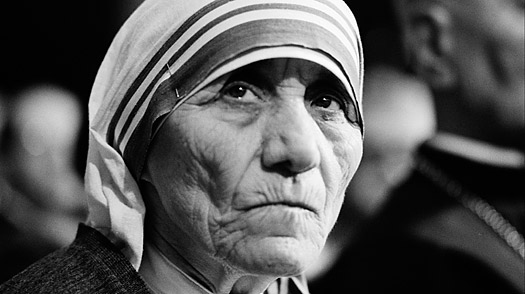
My quest for an understanding of joy was likely fueled by reading An Unquenchable Thirst. Much like the author Mary Johnson, I fell in love with Mother Teresa when I was young. A drawing of Mother Teresa with the words Living Saints in large, bold letters graced the cover of time magazine when I was about 18 months old. There is no way that image could have impacted me like it did Johnson, but I grew up having a knowledge of saints (likely from my mom’s Orthodox family) and having a certain reverence for Mother Teresa. I read everything I could about her, and I believed I had been a nun in a former life (okay, really I still believe it). There is simply something that appeals to me about living with other women whose thoughts are directed toward God and others; there is something that strikes a chord within me when I think about regulating my day with service and prayer. I have always thought that I might experience more joy in a place that was filled with Christ’s love.

This photo was taken from http://topics.time.com/mother-teresa/. This photo was taken from http://topics.time.com/mother-teresa/.

When I read Johnson’s book, I learned what I knew deep down: sometimes things aren’t what they seem. I had always assumed, until the August 2007 Time Magazine article,  that Mother Teresa was the most joyful woman on earth, and if I believed what Cunningham writes about Wesley’s thoughts of joy she might be: “Joy is a theological virtue implying habitual self-sacrifice and service of neighbour, even in the midst of sorrow and despair. The desire to love and serve is animated by true joy in the Spirit, and cultivated through commitment and practice” (286). Half-heartedly I agree with this. Before I read Johnson’s story, I (maybe) would have whole-heartedly agreed with it. Joy seems to be fed by giving to others, but I worry, now, if giving everything to others renders us not joyful but broken. Theologically, I suppose that very brokenness is where some folks would say that God works when we can’t. You know, the “Jesus works through our brokenness” idea? I am not sure I can buy that line of reasoning anymore, not the brokenness reasoning, but the idea that if we sacrifice and serve, we’ll be joyful. In fact, Wesley himself writes: “Yet it cannot be denied that many times joy is withheld even from them that walk uprightly” (Cunningham 286). Does pouring one’s whole self out into others and loving and serving provide joy? Yes, but not always. No, but sometimes. Maybe.

So, here I am at the end of my first consideration of the cultivation of joy, and I have studied and learned what one person thinks about joy. After thinking about how to cultivate joy, do I feel more joyful? Not yet, but I am hopeful.

The End and the Beginning

New Year’s Eve asks us to look back into the past year in order to assess where we’ve been, and it simultaneously begs us to look forward with hope that our future is brighter than, or at least as bright as, our past. Everybody and their brother is posting their reflections and their resolutions, so I figured why shouldn’t I. At the very least, this post will give my friends a heads up about the resolutions I’ll be breaking come January 3rd or 4th.

Obviously, if you’ve read this blog in the past year, you’ll notice that the past 365 days haven’t been a cakewalk for me. While my life has been incredibly blessed, I’ve had a really difficult time recognizing my blessings and reveling in them. My goals for this year in no particular order were:

  1. Eat paleo.
  2. Watch less TV.
  3. Exercise in a variety of ways (including swimming) while running (barefoot) a race a month.
  4. Meditate.
  5. Read more, including the Bible and Common Prayer.
  6. Play and find my inner hippie again.
  7. In short, do things which bring me joy. Relax.

Listing my goals out like that reminds me of Benjamin Franklin and his list of 13 Virtues or John and Charles Wesley’s tabulations of their moral behaviors. I suppose if I am going to list my resolutions or goals, I should keep track of how well I am doing with them in some manner. I don’t. I ate mostly paleo and lost about 50 pounds (I did gain some of that back this holiday season!). I can’t say I’ve watched less television; in fact, I may have watched more (Oh, Mariska, how you tempt me!). I did exercise a lot, but not as much as I would have liked. I finished my first triathlon, so that’s pretty decent. I totally left out meditation and prayer for a good portion of the year. I felt so disconnected, and I am not sure whether my lack of meditation caused the disconnection, or if I didn’t meditate because I felt disconnected. Either way, I didn’t spend enough time alone with my thoughts and God. I read a lot more, but not the specific texts I mentioned I would focus on. I played more, and playing was lovely. I did things which should have brought me joy, but they didn’t always. Instead I feel as if I just focused on the negative, even when I swore I would focus on the positives. I’m a realist; it’s difficult for me to be to be positive. I am going (to try to) to fix that this year. #PollyAnna2012 will become #joyful or #merrymaking or #radicaljoy for this year.

In short, I want this year to bring less of this:

535465_10100890792332028_552955746_n

And much, much more of this:

309358_10100711963581278_1649099758_n

Speaking of this year, here are my goals in order of their current importance to me and my mental and physical well being:

  1. CULTIVATE JOY: Do things which me bring me joy. Embrace the random. Enjoy the mediocre. Don’t stress over things I can’t control. Live in the moment and revel in those I spend my time with. Put down my phone or my other distractions and really love and live the moment.
  2. CONSUME CLEANLY: Eat better food. Drink less cider and more water. Put into my belly those foods which will best fuel my body for physical activities and mental joy. I’m going to attempt to jumpstart this with a new Whole 30, beginning on January 7. I want a clean slate and a clean body for the new year.
  3. EXERCISE: Exercise in a variety of ways (including swimming) while running at least a mile a day. Finish a Half Ironman triathlon before my 39th birthday. Carpool or walk or ride my bike to work every day. Use the body and the buses for transportation as frequently as possible.
  4. BE INTENTIONAL: Watch no TV, except an occasional movie. Use social media for no more than half an hour each day. Replace the time spent on nothingness and meaningless conversation with strangers with pursuits of intellect and kinship. Meditate, pray, read, and contemplate theological and academic things. Practice silence. I also would love to finish this dissertation.
  5. PLAY: Play and find my inner hippie again. In the spring, I’ll start a disc golf club at school.
  6. STAND UP: Begin standing up against injustice in a real and tangible way. Use grace and love to resist those things which are unethical or immoral. Help the Burris GSA, Prism, to be more active and visual by bringing meaningful activities into my students’ lives.

These are my hopes, dreams, goals, resolutions for 2013. I hope to use Sunday mornings to write in this space about these goals and about current events. I will begin tomorrow morning, though it isn’t Sunday, by writing in depth about that first goal of practicing joy. Practicing joy will no doubt be my most difficult goal, but for me it is by far the most important. I can’t have another year like this year. Any suggestions you have about cultivating joy are welcome! How do you cultivate joy?

For some running inspiration, join us with this challenge:

IMG_2790

Winter Break Retreat and Dissertation Work

I’m spending my winter break at home by myself. Well, more accurately I am spending it at home with five cats, three dogs, a fish, and some outside birds. More importantly, however, I am spending it in a quiet house. I decided to use the time I’d be home alone to give myself a spiritual retreat of meditation/prayer, silence, and reading/writing. Of course, this retreat isn’t as focused on spiritual matters as I would like it to be, because it has to be equally focused on school matters as I work to finish this dissertation re-proposal. I’m enjoying the fact that my typical day is looking somewhat contemplative at least.

For the past several days, since the day after Christmas (so when my mini-retreat concludes with Bec’s return on Sunday evening it will be a five day fast from normality) my day has looked like this:

  • Instead of using the alarm clock, I’ve been getting up whenever I feel like waking up. Most mornings it’s been between seven and eight in the morning.
  • After getting dressed, the first thing I do is put a pot of water to boil on the stove, set on low, so I can make a French press of coffee when I get back from walking the dogs.
  • I take a nice, slow walk with my dogs and give them lots of extra love once we return home. I take care of the cats, feed the birds and the fish.
  • I make coffee, eat breakfast, and have a bit of prayer/contemplation time with the help from Common Prayer and some fragrant incense. I light my St. Jude candle and pray for assistance with this dissertation, because it seems like something I should ask for help from the patron saint of the impossible.
  • Once I’m finished with morning prayer time, I read whatever text it is for the day for my dissertation and I take notes on the text.
  • I stop to make lunch/dinner, and I spend time doing some physical activity (riding my bike trainer, walking, shoveling snow) to make my thoughts congeal. Then I write a bit about the text I read that day.
  • Finally, I have allowed myself only an hour and a half to use Facebook, talk on the phone, text, email, or meet with friends. The rest of my day, from whenever I wake up until 9PM is spent in contemplative silence. At 9PM, I watch a bit of TV while trying to fall asleep.

I’ve noticed that during this week my thoughts have become clearer, my energy has gone back up, my spiritual life has turned for the better, and I don’t really miss talking or watching TV. I’d love to take a week long silent retreat at a convent or monastery some time, where I can’t even have a computer and can only use the land line telephone to make calls.

I’ve made some interesting discoveries about myself this week, too. The first is that I need an intense amount of what my friend Amy calls “self-care.” Here is what I wrote to another friend of mine about the dark night I went through this November; it was the worst one I’ve experienced to date. “I’m also not being preachy (okay just a little bit) when I say that even Jesus had to take a time out once in a while to feed his soul. Families complicate that, and so do friends sometimes, and it’s hard to strike a healthy balance between the two. I find that sometime the ‘should’ rules bind me in to the point where I can’t have fun or enjoy life even when I don’t have something I ‘should’ be doing. That’s the point I was at in November (the very bottom of the barrel), and, yes, I’ve always (since I can remember) struggled not with the notion of killing myself, but of sometimes feeling that I’d be better off in another place or that my life is too overwhelming to keep living. I have only been in a really bad spot like that a couple of times in my life and I had a really hard time getting out of it this time. It made me realize that sometimes for me the ‘should’ is taking care of myself, even if it means doing things at the expense of spending time with others. You know I love a good conversation and some good quality time, but I had to take a weekend to ‘go to a conference’ to get my perspective back. Thank God for my friend Amy, who is a hospice chaplain. She didn’t realize that she was going to have work in her off hours. Since then, I’ve tried really hard to make at least half an hour for myself before anyone else is up. I get up at 4AM most mornings to get time to run, pray, worship, and feed my soul. I am super tired sometimes because I am so not a morning person, but I find the trade-off to be worth it.” I owe my sanity to my friends Sarah and Daniel as well. I am not sure any of them really knew how fragile I was that weekend, but I had a hard time even enjoying anything, let alone learning anything at that conference.

Sometimes—I’ve learned about myself—I am really high maintenance in the emotional department. I can be dark and brooding, and I am sure it is difficult to be my friend. However, I am so thankful for those people who stick by me and who keep me laughing (or at least smiling) when I really question why I am here at all. I’m not saying this to be melodramatic or to draw attention to myself, but I am saying it because I know there are others out there who feel the same way. I wonder probably too frequently what is the point of my existence, and before you think it, yes, I do love the existentialist writers, particularly Dostoevsky. I do know, somewhere deep down inside of me at all times: there is hope, there is help, and there is healing. I’ve experienced it again and again through my friends and through my faith. There is a purpose to all of this, but for me it’s difficult to understand.

I’ve learned that when my faith suffers, I suffer. When I get in a place like I was in November, that dark and scary place, I can’t feel God or connect with God in any meaningful way. Do I keep searching? Yes, but it feels as if I just keep finding nothing at the bottom of dark, dark hole. There aren’t many people who I know in my life who would admit to this feeling, but I am sure we all have it at least fleetingly. I think too much, I rationalize too much, and I don’t just “let go and let God,” as the cheesy saying goes. Well, I can’t do that. And I do think it’s cheesy. I prefer my theology with a dose of reason and my faith with a dose of doubt. Though I am in a much better place now than I was in November, I still wouldn’t say I’m a bucket of sunshine and rainbows. Full of hope, but realistic about it.

One of the books I read over break, which had nothing to do with my dissertation, but which helped me to think about my faith in new ways was An Unquenchable Thirst by Mary Johnson. The book is basically about her long struggle as she lived as a Missionary of Charity for twenty years of her life. Many of her theological struggles are mine, many of her relational struggles are mine, and many of her solutions are mine as well. The place where the book challenged me the most was near the end. Johnson leaves the Church: “I don’t tell Father Bob about the still, small voice I heard within. Look inside yourself, the voice said. God is like the best parts of you. From there it was a short step to God is the best parts of you. [. . .] I tell him that the freer I become, the more beautiful I grow” (522). I am not sure that I can follow her to the point of leaving the Church, but I can certainly respect her ideas and would love to bring them into the Church. From her story, I can only imagine her being able to relate to God in such a manner (one without the presence of hierarchical church structure). In many respects the Church has made God out to be the best parts of it, so why as individuals can’t we believe that God is the best parts of us? The peaceful, loving, grace-filled, compassionate parts of us. Near the end of the book Johnson writes about the way most people remember Mother Teresa as being filled with joy, almost nonhuman in her joyfulness: “I feel odd to prefer the human to the perfect; maybe that’s why I don’t fit anymore. I want earth, not heaven” (523). I think I must be super selfish, because I want both.

I find that when I keep a balanced perspective about theology, when I realize that some of my understanding of heaven comes from Scripture, and that much more comes from experiencing God’s love (and human maliciousness) here on earth, I can relate to God much more clearly. Just this morning, after four days of “retreat,” I was finally able to pray again (it’s been a long time coming), to feel as if God heard my thoughts, heard my prayers. I felt as if I was literally in the presence of God. As I prayed for others, I felt their names, their faces, their difficulties come rushing forward to meet my lips. This experience wasn’t from me, but was it from God? Do I owe this to some divine breakthrough or is it more the fact that I am just relaxed? Have I just given myself enough self-care to be open enough to be in the presence of God? Have I tricked myself with contemplation and incense? Have I tried harder this week and somehow tricked myself into feeling God’s presence? Is it the beauty of the snow? Is it having time? Is it the lack of stress? Is it an emotional spoke in my menstrual cycle? These are the questions I ask myself when I start to feel to deeply and can no longer rationally explain my theological ecstasy. I want both the rational and the completely irrational, the earth and the heavens, the justice and the grace. I want to enjoy the mystery. God, I want.


My Own Private Advent

I know Advent hasn’t technically begun, and won’t technically begin until next Sunday, December 2, but the past few days have felt like days of anticipation.I feel like things are changing for me. I still feel pretty hopeless most every morning, but I know there is an end in sight. While Bec and I were on our Thanksgiving road trip, I realized that I have much to be thankful for and much that I take for granted. I spent five days riding in a truck with a woman I love. We stopped at nice hotels. We ate excellent food. We met friends, new and old. We walked on the beach. We just enjoyed each other’s company. I take things like that for granted, but I know my life could be radically different.

I have quit Facebook and Twitter, and I am pretty sure it’s for good. I waste a lot of time and the posts people make are inane and anger-filled, so I’d just rather not participate. I’ll miss seeing pictures and having people see mine, but I won’t miss the angry posts. I have enough anger of my own; I don’t need to borrow any more from other people. That being said, I plan to celebrate Advent by writing, reading, running, eating clean, not watching TV and not taking my life for granted. If I have time, I’ll add in doing some art. I’m looking forward to doing that again. And, of course and most importantly, I’ll look forward to Christ’s coming.