Today is the first day of my ten-week summer break, and it’s exactly six weeks until the Muncie 70.3. I have also signed up for the Indianapolis Monumental Marathon on November 2, twenty-two weeks away from today, hoping that I will make it across the finish line this time. I’m a much better runner now than I was the last time I tried, and I will have completed the 70.3, which I bank on giving me the stick-to-it-iveness to make across the marathon finish line. I can only hope for the freezing rain they had last year when we volunteered. I hate being overheated when I run.
While it’s difficult for me to imagine that the last time I wrote here was six weeks ago, I guess the lack of writing on my part is an indication to you that I have been super busy. I’m looking forward to this summer for so many reasons (not parallel listing): no dissertation hanging over my head, reading anything I want, a diversity seminar on campus about inclusive pedagogy, family vacation, triathleting, possibly some art, clean eating, online meditation classes, refinishing hardwood floors, playing disc golf, playing with my animals, and naps.
There are so many things I’d love to write about, that have been heavy on my mind and heart recently, I can’t begin to touch them in one blog post, so I am making it my goal to pick back up with the idea of joy and blogging about my main goals for this year. I hope to write every day this summer, so I’ll no doubt be writing about some current events and things like that, too.
Lastly, for dinner I am making bacon wrapped shrimp kebobs on the grill, and I hope they are delicious. If they are, I will be sure to post pictures of them tomorrow.
We’re quickly closing in on the end of the school year here in good ol’ east central Indiana. My students are antsy, and so am I. My colleague Abbie and I are getting ready to begin a really cool project with our students. For the entire month of May, our students will complete a self-directed project based on those topics, writers, texts, or themes that we were unable to cover throughout the school year, but the important part of the project is that they will not only choose their topics, they will also design their final essay/project based on their research. We’re really excited to do something that we think is pretty cutting edge for high schoolers. Of course, we’re requiring them to complete certain things during their course of study, but for the most part, it’s up to them to carry out the study while meeting with us once a week to discuss their work. I’m sure this project will beat the pants off of the ECA (end of course assessment) they’re required to take for the state.
*
The Muncie 70.3 is twelve weeks away. I’ve been training, but this next week I put the pedal to the metal as the miles increase from here on out. I need some help with accountability, and I know that it’ll be obvious if I don’t train well, but I tend to skip workouts because of exhaustion from work. I’m hoping if I post MyTrainingSchedule here, some of you who read this and who correspond with me on Facebook or Twitter will help keep me honest. Seriously, I’d love it if you ask me once a week or so whether I am sticking to my training or not. I am generally pretty disciplined, but every little bit helps!
I’m also working on moving back to a mostly paleo diet for the fueling of this adventure. I’ve been “cheating” a lot and drinking beer, eating wheat products, and snacking on ice cream. None of these help me accomplish my goals: the alcohol makes me tired, the wheat makes me bloated and gaseous, and the ice cream makes my joints ache. When I eat paleo, I feel so much more energetic and clean. I am sure the food I eat will make or break my venture.
I’m also in need of losing a few more pounds so I don’t look like a sausage in my new Muncie Area Fun Squad tri-kit. If I train consistently and eat properly, I have no doubt that I’ll lose the 15 pounds I need to lose by July 13. Incidentally, I am pretty proud to be finishing this Half Ironman the week before my 39th birthday. Now I just need to finish a marathon by next July, and I will have accomplished both of my “before 40” goals. Maybe my “before 50” goals will be an ultra-marathon and a full Ironman! Haha!
*
When I heard the news about the Boston Marathon bombing, I had several reactions, none of which I believe were any different than those reactions had by others: shock, dismay, fear, compassion, anger, love, and pretty much every other emotion a person can have, all rolled into one. I feel this way every time I hear of a tragic event like this one.
Now, a few days later, I just want us (humans) come together to provide healing for the victims, healing for the family of the two young men, a legitmate (not hate-influenced punishment) for the remaining bomber, grace to those people who can’t get past their hate, and safety for those folks who are part of big, un(or poorly)guarded sporting events like marathons. I don’t want people to be scared. I don’t want people to be angry. I don’t want people to seek revenge. I want peace. I want justice. And I want grace. I want to imagine.
To be or not to be? That is the question:
whether ’tis nobler in the mind to suffer
the slings and arrows of outrageous fortune
or to take arms against the sea of trouble
and, by opposing, end them. To die, to sleep.
No more, and by a sleep to say we end
the heartache and the thousand natural shocks
this flesh is heir to. ‘Tis a consummation
devoutly to be wished. To die, to sleep;
To sleep, perchance to dream. Aye, there’s the rub.
For in that sleep of death what dreams may come
when we have shuffled off this mortal coil
must give us pause. There’s the respect
that makes calamity of so long life.
I asked my British literature students to memorize at least fifteen lines from Hamlet. They had to write it on their blank paper, then explain what the lines meant, then explain why those fifteen lines were the ones they chose to memorize and why they were important in the context of the entire play. My students, in return, challenged me with the same, only I had to say mine in front of the class. The lines above are the lines I memorized, and you’ll notice there are only fourteen lines there. I wanted to memorize the first twenty lines, including these: “For who would bear the whips and scorns of the oppressor’s wrong, the proud man’s contumely, the pangs of despised love, the law’s delay, the insolence of office, and the spurns that patient merit of they unworthy takes, when he himself might his quietus make with a bodkin bare?” I didn’t get all of them memorized for today, but I hope to have them by tomorrow. If you knew me, you’d know how difficult this was for me. I am horrible at memorizing things verbatim. I tend to live by the spirit of the law, rather than the letter of the law, if only because I can’t memorize it by the letter. I chose these lines, because, aside from them being wildly popular, I love their depth and their beauty. I would also like to memorize Gertrude’s lines about Ophelia’s death. Both soliloquy’s describe the ways in which the characters’ roles hem them in and confine them according to the cultural standards of the time period. I’m intrigued by that.
*
Yesterday I spent the day with my brother. We started the day by running a 2.5-mile trial at Mississinewa Reservoir in Peru, IN. The trail was soft and muddy, so the running was slow and tedious with lots of roots and raspberry bushes reaching out to snag our legs. I had mud all over me. I even found some in my hair in the shower this morning. After we ran, we drove to Logansport and ate at a Thai/Philippine restaurant called Dinghy’s. We both had delicious, but really not healthy, food, and I had hot thai tea. From there we headed back to Peru to the McClure Family Orchard to sample some ciders and meads. They were good, but they weren’t really exceptional. The jalapeño one was especially odd. Finally, we headed back to Muncie via Upland, so we could stop at Ivanhoe’s for ice cream. Adam’s shake was horrible (apparently they have radically changed their milkshakes portions because there was almost no butterscotch, very few frosted flakes, and about ten mini-marshmallows in the whole thing), and my sundae was fine, but I ordered the wrong one, so there were no pecans on it. The day was excellent, though, and we had a great time spending the day doing sibling things!
*
When I started this entry, it was April 2, so I suppose that tells you a bit about my life as of late. My life is too full of stuff. My life reminds me of this George Carlin skit about stuff:
I had too much stuff. So I re-quit my dissertation. I quit piano lessons. I’m about to quit doing most of the extra stuff I’ve been doing. I’m about to go through my stuff and quit some of it. But, because I have this sick will to fill the space with something, I am training for a Half Ironman I’ve mentioned here before. Now is the time to put the rubber to the road in a literal way on my bicycle and on my feet, and it’s time to put the flesh to the water?! Well, however you might say that, it’s time to get my shit together, because there are only fourteen weeks until showtime. I’ll be amping up the exercise and completing a Whole 30 starting tomorrow.
I also had so much stuff going on in my life, I didn’t get in a blog entry about Scotland. We went there for 8 days and 7 nights. We had the time of our lives with Andy and Claire. We stayed in Glasgow, Inverness, and Edinburgh. We got married in front of the Art Museum on the last day we were there. It was cold, it was rainy, and I had to wear the hat. I’ll write more about it later. I’m working on some serious essays about it, so I’ll let you know when they’re done.
*
All of this brings me back to my goals I’ve set for this year:
Cultivate joy. I am trying to cultivate joy in new ways, and I am trying to keep from falling back into those patterns that don’t bring me joy. I’m trying not to focus on the negatives. Some days this is easier than others.
Consume cleanly. For about a month, I’ve been really lax on the foods I’ve eaten. I’ve eaten lots of sugar, alcohol, and even some wheat. My body is not happy with me. My blood pressure was a bit higher last time I checked it, and my allergies have been acting up something fierce. I believe that if I get my food consumption under control, my lungs will be much less likely to be congested, making my breathing better.
Exercise. I’ve been running at least a mile every single day. I think four days this year I’ve been too tired to run, so I’ve at least walked. I’d say that running 91 out of 95 days is pretty decent. I’ve also done some swimming and some biking, but this week is when I really put my nose to the grindstone.
Be intentional. I’m working on this one.
Play. I’m working on this one, too. Possibly getting rid of some of the stuff I’ve been doing will give me a bit more time to play.
Stand up. Yep. The GSA is thriving, so I’d say, at the very least, I’m standing up for my GLBT students and their allies. It’s good stuff.
I am slowly coming to realize that joy is not necessarily an outwardly expressed, chipper, I-am-so-happy-because-everything-is-fine type of feeling or attitude. Joy is an inwardly felt, deep, intense, I-am-so-connected-with-Jesus-I-can’t-help-but-feel-any-other-way-(at this moment)-and-I-can’t-help-but-share-this type of feeling or attitude. And, it seems as if everything I read about joy indicates that it’s cyclic. Of course, the goal is to be in a permanent state of joy, but because we have other human emotions, the permanence is varied depending upon the presence of those other emotions.
For example, according to an article by Sylvie Supper titled “Spiritual Joy in the Works of St. Bernard,” St. Bernard believed that joy is one of four inner movements. The other three are sadness, love, and fear (361). Supper quotes Bernard’s own writing: “If sadness follows fear, it brings despair. If joy comes after love, it brings laxness. Let joy then some after fear, for fear dreads what is to come, whereas joy finds happiness in what is present and possesses the object of a prudent security. Joy must therefore put fear to the test. And a tested fear is nothing but prudence. Sadness must follow joy, for whoever remembers sad things will embrace joyous things with moderation. Thus sadness must balance joy, and a balanced joy is nothing but moderation” (361-2). The part of this statement that resounds with me is this: “Joy must put fear to the test. [. . .] Sadness must follow joy, for whoever remembers sad things will embrace joyous things with moderation.” I find myself telling my students that bad things happens in order to help us recognize the beauty and grace that surrounds us every day, but St. Bernard says that remembering sadness will help us “embrace joyous things with moderation.” What that says to me is that if we remember sadness, we’ll realize that joy is temporary and subject to change. We won’t let ourselves be swept away by joy, but we will realize the beauty of that joy, because we remember the sadness we’ve experienced as well. On this earth we must recognize there will be highs and lows. We should expect them, and remember each to temper the other. Now I feel like I am talking in a circle: joy, sadness, joy again, sadness again.
In order to illustrate the various types or levels of joy, St. Bernard sets up an excellent metaphor involving drinking: a taste is the joy of God we can experience during life, drink is the joy that is experienced by the souls of the saints, and inebriation is the experience of joy at the resurrection of the body (364). In this life, we can only taste; we can’t become inebriated. He quotes Psalm 35: 9, but I think both 9 and 10 help to better explain this idea of the inebriation of joy: “Then my soul shall rejoice in the Lord, exulting in his deliverance. All my bones shall say, ‘O Lord, who is like you? You deliver the weak from those too strong for them, the weak and the needy from those who despoil them.'” It’s as if the speaker’s entire body is steeped in deliverance, and why would that not bring an intoxicating, inebriating joy? “All my bones shall say” I am filled with the joy of the Lord. How many times has my whole body said, “I am inebriated with you, Lord”? Not yet. Not here. St. Bernard, much like John Wesley from the last post, says that inebriating joy will come later, that it’s not this-worldly.
Jubilus cordis is “the very music of the heart,” which is only found when our hearts experience “the deepest and most intimate joy of the soul united with God” (366). This intimacy is given to us through the books of Proverbs, Ecclesiastes, and the Song of Songs, and it is felt as if from an intimate couple, such as two individuals who marry or who are deeply, intimately bound. Supper says that this intimacy “is a certain experience of God that communicates to the soul [God’s] sweetness and the joy of [God’s] presence” (366). This reminds me of the song “You Are So Good to Me” by Third Day. The chorus says, “You are beautiful my sweet, sweet song,” which seems like a version of this intimacy with Jesus that’s prevalent in Song of Songs.
Finally, Supper explains that though St. Bernard focuses on the inner workings of joy, joy cannot help but radiate our from us. We should have a desire to share our inner joy with others. So, for Bernard, as for Wesley, this inner attitude becomes an outward attitude. Something we just can’t help but share. I suppose first you have feel joyful inwardly, which is my difficulty. I’m not sure if I should expect this joy that can’t help but radiate to be a knock-me-down kind of joy, or just this occasional sweet, peaceful, sort of pukey feeling I get in my soul when everything seems to be right with God. I think it’s the second one, because it seems to be tempered with fear like in the first part of this post, but I also think St. Bernard thought it was the first one, too. Joy is subtle and joy is blatantly obvious. Basically, joy boils down to, again, a relationship with God. Joy is part of the fruit of that relationship. It’s a part of the fruit I wish I could taste more frequently. I want to be inebriated with joy. Here. Now. I don’t want to have to wait for it. I’m the Veruca Salt of the spiritual fruit: I want it now.
*
Supper provides a nice little glossary of terms St. Bernard uses for joy:
gaudium: signifies all kinds of joy
laetitia and exsultatio: signify the exultation of those who have found God, opposite of bitterness; confiteor: the praise of whoever gives thanks to God
hilaris: one who gives joy, the radiation of the face
jucundus: someone who leads another to joy
congratulatio and congaudere: shared joy
alacritas: fervent and driving joy
delectare: delight found in resting in God
jubilus: the inner song of the soul united with God
My first goal of 2013 is to cultivate joy. In my last blog post, I wrote that in order to cultivate joy, I would “do things which me bring me joy. Embrace the random. Enjoy the mediocre. Don’t stress over things I can’t control. Live in the moment and revel in those I spend my time with. Put down my phone or my other distractions and really love and live the moment.” For me those are the beginning steps to cultivating what I perceive to be pure joy. Because I am not the most joyful person, I decided to learn from what others have written about joy. What is joy? How does joy work? Is joy the same thing as happiness? Is joy what some mystics call ecstasy? Is joy something that one must experience every day in order to be considered joyful? I suppose I had (maybe still have) many, many questions about a theological, psychological, and behavioral characteristic I claim I am going to cultivate this year.
I intentionally used the word cultivate for what I intend to do with joy. There are really three types of cultivation. One type is more like refinement, which would require that I already possess some amount of joy that I simply plan to nurture and shape into much more mature, refined joy. This is not the type of cultivation I will be accomplishing. I will be using a combination of the second two types of cultivation: improving by the care or study of joy and fostering the growth of joy.
Much like a farmer cultivates crops in a field or a scientist cultivates specimens in petri dishes, I plan to plant, encourage, maintain, and harvest this joy. I plan to do the backbreaking work of starting from the ground up, digging little holes, planting little joy seeds, growing little joy plants, and then harvesting whatever little joy flowers or fruits grow from those plants. This is a whole new endeavor, and I didn’t even buy crop insurance. I’m not sure this is the sort of thing that can be insured. I’ll either come away with a bouquet of flowers or a peck of fruits from this year of cultivation, or I won’t. The pursuit of joy is mostly up to me and my willingness to work for it. Sounds weird: work for, cultivate joy.
Similarly, much like I have studied for the past few years to cultivate my knowledge of literature, I hope to study to cultivate my understanding of joy. I started by reading four articles, which is of course where I would start with this damn rational mind I’ve been given, but I plan to pay more attention to those people in my life who seem to be joyful. How is it that they can experience joy, when there is so much sadness, so much angst, and so much depravity in this world? Do they maintain certain habits? Do they hold certain attitudes? Do they rely on their spiritual lives, whatever religion or non-religion they may be? How do they seem to be so filled with joy?
Naturally, I first turned to John Wesley for thoughts about joy. Not because he was necessarily a joy-filled man, but precisely because he strove toward joy and sometimes fell short, did I turn to Wesley for wise words about the topic. In the article titled “John Wesley’s Moral Pneumatology: The Fruits of the Spirit as Theological Virtues,” Joseph William Cunningham writes: “The cultivation of spiritual virtue is abstract from community. Believers develop the holy tempers of righteousness, love and peace in relation to their neighbour. The fruits of the Spirit, though inward dispositions of the soul, are always socially oriented” (284). When I read these lines, I had three thoughts. First, I was elated that he used the word cultivated because that’s my word! (:)) Second, I was thrilled that he used the virtue, because when I was writing my goals for this year, I had in the back of my mind Ben Franklin’s thirteen virtues. Third, all theological concepts work best, and are meant to work best, when practiced in community. We are not designed to be solitary beings.
On a more serious note, I really was elated when I saw these lines, but it was more because it has always seemed that joy is an inwardly focused theological concept; joy is about how I feel, right? The above quote made me think of the many ways in which joy is much more outwardly focused. Though Cunningham doesn’t list joy here in this passage, I can’t help but think joy comes in community, that joy is an “inward disposition” that should be “socially oriented.” I’ve experienced joy in my life, and usually that joy was felt in community. I have been in love, which was joyful. I have won competitions, which was joyful. I have experienced God, which was joyful. I’ve sung spirituals and released my pain and suffering, which was joyful. In every situation, while I was the person experiencing the joy, there were others experiencing it with me. I am not sure I have ever experienced joy alone. And if I have, my first inclination was likely to share that joy.
One reason I may not be the most joyful person is that I abhor those shiny, happy Christians I grew up with. Seriously, you can’t possibly be that happy all the time. Joyful? Maybe. Shiny happy? I doubt it. I was thrilled when I was reminded that Wesley struggled with the concept of continuous joy. Later in the same article, Cunningham quotes Wesley: “A will steadily and uniformly devoted to God is essential to a state of sanctification, but not an uniformity of joy or peace or happy communion with God. They may rise and fall in various degrees; nay an may be affected either by the body or by diabolical agency, in a manner which all our wisdom can never understand or present” (285). In other words, all of those people who told me I had to be happy to show my Christian faith were wrong. My will has been constantly (or nearly so) devoted to God. Only the outward signs of the fruit of the spirit have wavered. We, in this lifetime, cannot be filled with “love, joy, peace, patience, kindness, goodness, faithfulness,gentleness and self-control” (Galatians 5:22-23). We are human, yes? Perfection is something to be attained.
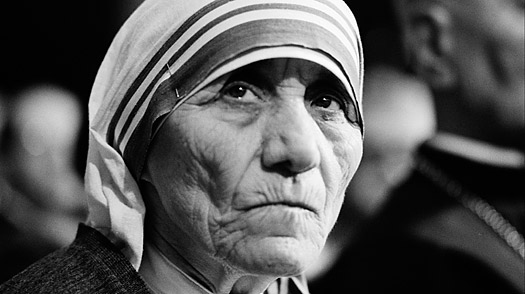
My quest for an understanding of joy was likely fueled by reading An Unquenchable Thirst. Much like the author Mary Johnson, I fell in love with Mother Teresa when I was young. A drawing of Mother Teresa with the words Living Saints in large, bold letters graced the cover of time magazine when I was about 18 months old. There is no way that image could have impacted me like it did Johnson, but I grew up having a knowledge of saints (likely from my mom’s Orthodox family) and having a certain reverence for Mother Teresa. I read everything I could about her, and I believed I had been a nun in a former life (okay, really I still believe it). There is simply something that appeals to me about living with other women whose thoughts are directed toward God and others; there is something that strikes a chord within me when I think about regulating my day with service and prayer. I have always thought that I might experience more joy in a place that was filled with Christ’s love.
When I read Johnson’s book, I learned what I knew deep down: sometimes things aren’t what they seem. I had always assumed, until the August 2007 Time Magazine article, that Mother Teresa was the most joyful woman on earth, and if I believed what Cunningham writes about Wesley’s thoughts of joy she might be: “Joy is a theological virtue implying habitual self-sacrifice and service of neighbour, even in the midst of sorrow and despair. The desire to love and serve is animated by true joy in the Spirit, and cultivated through commitment and practice” (286). Half-heartedly I agree with this. Before I read Johnson’s story, I (maybe) would have whole-heartedly agreed with it. Joy seems to be fed by giving to others, but I worry, now, if giving everything to others renders us not joyful but broken. Theologically, I suppose that very brokenness is where some folks would say that God works when we can’t. You know, the “Jesus works through our brokenness” idea? I am not sure I can buy that line of reasoning anymore, not the brokenness reasoning, but the idea that if we sacrifice and serve, we’ll be joyful. In fact, Wesley himself writes: “Yet it cannot be denied that many times joy is withheld even from them that walk uprightly” (Cunningham 286). Does pouring one’s whole self out into others and loving and serving provide joy? Yes, but not always. No, but sometimes. Maybe.
So, here I am at the end of my first consideration of the cultivation of joy, and I have studied and learned what one person thinks about joy. After thinking about how to cultivate joy, do I feel more joyful? Not yet, but I am hopeful.
The ideas you find here are solely mine, but I have made every attempt to give credit to any sources I may have used. You should not associate the opinions or ideas written in this blog with my employer, colleagues, or peers. Nothing that you read here is meant in any way to represent anyone else's opinions or ideas, nor is it meant to cause injury to anyone else.